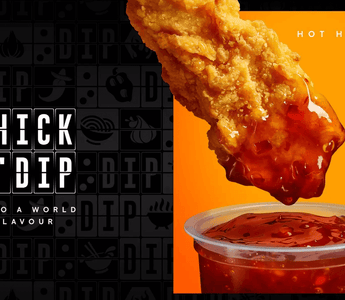
Domino’s Pizza Group is taking a step outside its traditional territory. After more than a year of development, the company has begun rolling out its new fried chicken range, Chick ’N’ Dip, across 187 stores in northwest England and Northern Ireland. While this might seem like a local UK story, it reflects a much broader global trend: major quick-service restaurant (QSR) brands are diversifying their menus, experimenting with new product lines, and battling for relevance in a rapidly evolving international fast-food landscape.
For business students, Domino’s strategy offers valuable lessons in brand extension, competitive positioning, operational efficiency, and investor relations—all key elements in modern business leadership.
The Global Context: Why Chicken Is Booming Worldwide
Fried chicken is no longer a niche category dominated by Kentucky Fried Chicken. It is one of the fastest-growing segments of the global QSR market. Chains such as Popeyes (US), Wingstop (US), Jollibee (Philippines), Pelicana (South Korea), and Nando’s (South Africa/UK) have expanded aggressively across continents. Their success reflects changing consumer preferences: protein-heavy meals, “American-style” comfort food, and shareable chicken wings have become internationally popular.
In markets from the Middle East to Southeast Asia, fried chicken often outperforms pizza in terms of frequency of purchase. The global chicken QSR market was estimated at more than $55 billion in 2023, and it continues to grow.
So Domino’s move into chicken is not just a UK story—it’s a strategic response to global consumer demand.
Leveraging Existing Infrastructure: A Smart, Scalable Strategy
One of the most fascinating aspects of Domino’s chicken launch is operational, not culinary.
Rather than investing in new fryers or kitchen layouts, Domino’s has engineered Chick ’N’ Dip to be prepared in its existing pizza ovens. This is a masterclass in operational efficiency:
- No major capital expenditure
- Staff can work with familiar equipment
- Faster national rollout potential
- Lower risk if the trial fails
In a world where global QSR chains often struggle with supply chain complexity, Domino’s approach aligns with a core principle: grow using the systems you already understand.
This strategy echoes McDonald’s expansion into coffee with McCafé, which famously leveraged existing restaurant space and labour. Similarly, Starbucks’ food expansion was designed to require no new kitchen equipment.
Competitive Dynamics: Challenging Global and Local Players
Domino’s isn’t entering a quiet market. Rivals like Popeyes and Wingstop - both US giants - are rapidly scaling internationally. In the UK alone, the fried chicken market is worth £3.1 billion.
But Domino’s has strengths that international chicken specialists lack:
- A huge delivery network
- Deep consumer penetration
- Strong brand loyalty
- Efficient point-to-point logistics
- Franchisees already trained in high-volume operations
CEO Andrew Rennie argues this gives Domino’s an edge over incoming American chicken brands. Globally, the same logic applies: Domino’s has more than 20,000 stores across 90+ markets, with each one designed for fast, consistent delivery. If the chicken range goes global, the company could compete not just on flavour, but on speed and convenience.
Balancing Growth Ambitions with Investor Pressure
However, diversification has raised tensions with investors. Activist shareholder Browning West, which owns 5% of the company, publicly criticised Domino’s multibrand strategy. It urged the company to return £100 million to investors rather than invest in new brands—just days before Domino’s announced a £20 million share buyback.
This highlights a crucial business lesson:
Innovative strategy must be balanced with shareholder expectations.
In global companies with franchise networks, long-term brand building can clash with investor demand for short-term financial performance. The same dynamic is visible in companies like Disney, Starbucks, and Unilever, where activist investors have pushed for refocused strategies.
For business students, this raises interesting questions:
- Should large QSR brands prioritise diversification or stick to their core product?
- How much influence should activist investors have on long-term strategy?
- Does a multibrand strategy dilute identity, or does it unlock new growth?
The Push for a Second Brand: A Global Ambition
Rennie insists that Chick ’N’ Dip is not a substitute for Domino’s broader goal: acquiring or developing a second brand to sit alongside pizza in its portfolio. This reflects a trend among global food giants like Yum! Brands (owner of KFC, Taco Bell, and Pizza Hut) and Restaurant Brands International (Burger King, Popeyes, Tim Hortons).
A multibrand portfolio gives companies:
- Diversified revenue streams
- Broader demographic reach
- Greater franchisee opportunity
- Stronger resilience in economic downturns
Domino’s sees itself as sitting on “massive infrastructure”: delivery fleets, data systems, franchise networks, and customer databases—all assets that can support more than one food brand.
Conclusion: What Business Students Should Take Away
Domino’s expansion into fried chicken may be starting in the UK, but it reflects wider global trends shaping the QSR industry. As markets mature and competition intensifies, major brands are looking beyond their traditional offerings.
Key lessons include:
- Global consumer tastes are shifting, with chicken gaining ground worldwide.
- Operational innovation can unlock new revenue without major investment.
- Diversification must be balanced with investor expectations.
- Strong infrastructure enables rapid expansion into new categories.
For future business leaders, Domino’s story is a compelling example of how international strategy, investor relations, and product innovation come together in the fast-moving world of global food retail.