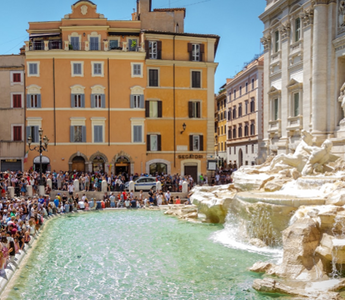
Rome has introduced a €2 fee to access the main viewing area of the Trevi Fountain, one of the most recognisable landmarks in the world. For centuries, visitors have freely admired the Baroque masterpiece and tossed coins over their shoulders in the hope of returning to the Eternal City. Now, that experience comes with a small price tag.
The move is not about profit in the traditional sense. Instead, it reflects a shift in how destinations, organisations and even businesses manage demand, protect quality, and fund long-term sustainability.
Why introduce a fee now?
The Trevi Fountain attracts millions of visitors every year. At peak times, the area becomes dangerously crowded, diminishing the visitor experience and putting strain on the monument itself. The €2 charge has two stated aims:
- Managing tourist numbers by discouraging casual overcrowding
- Raising funds for maintenance and preservation
Some tourists have welcomed the change, arguing that fewer people will mean a calmer, more enjoyable experience. Others are less enthusiastic. One visitor from Sicily reportedly summed it up bluntly: you simply “pay and smile”.
That tension between acceptance and frustration is familiar well beyond tourism.
Scarcity changes behaviour
From a business perspective, the Trevi Fountain fee is a classic example of using price to regulate demand.
When something is completely free:
- People linger longer
- Crowds grow quickly
- The perceived value often falls
Introducing even a small cost forces visitors to make a conscious decision. €2 is not prohibitive, but it creates a psychological pause: Do I really want to go in right now?
Many businesses apply the same principle:
- Gyms charge joining fees to reduce casual sign-ups
- Streaming platforms remove free tiers to improve conversion quality
- Events cap attendance or raise prices to improve experience
The goal is not exclusion. It is intentional participation.
Paying for experience, not just access
Importantly, Rome is not charging for the fountain itself. You can still see it from surrounding areas. The fee applies to the prime viewing zone, where crowd control and conservation matter most.
This distinction mirrors how many modern businesses operate:
- Basic access remains free or low-cost
- Premium positioning, convenience or experience is monetised
Airlines, museums, software platforms and even universities increasingly differentiate between access and experience. Rome is doing the same - just with marble instead of membership tiers.
Funding sustainability transparently
Another lesson lies in how the fee is justified. The money is explicitly linked to:
- Upkeep of the monument
- Long-term preservation
Visitors may grumble, but they understand the logic. When people see where their money goes, resistance softens.
For organisations, this is critical. Customers are more willing to pay when they believe:
- The charge is fair
- The benefit is visible
- The quality will improve
Hidden fees breed resentment. Purpose-driven pricing builds trust.
The risk of “pay and smile”
That said, the skeptical tourist’s comment highlights a real risk. If people feel they have no choice, goodwill erodes quickly. Over time, even small charges can feel symbolic of over-commercialisation, especially in places with deep cultural significance.
For businesses, this is the line to watch carefully:
- Are customers paying because they see value?
- Or because they feel trapped?
The Trevi Fountain fee will only succeed if visitors genuinely notice:
- Reduced crowding
- Better preservation
- A more dignified experience
Without that payoff, €2 becomes an irritant rather than a solution.
A wider trend
Rome is not alone. From Venice’s entry fees to timed museum tickets across Europe, destinations are rethinking unlimited free access. The underlying message is clear: demand must be managed, not just welcomed.
In business terms, this reflects a shift away from growth at all costs toward sustainable value creation.
Final thought
The €2 Trevi Fountain charge may seem trivial, but it reflects a much bigger idea: scarcity, when handled thoughtfully, can protect quality rather than undermine it. Whether you run a global city, a heritage site, or a modern organisation, the challenge is the same - charge just enough to improve the experience, without losing the goodwill of the people who value it most.