





ACCA FA – Financial Accounting - Free 7 Day Preview
Couldn't load pickup availability
Experience ExP’s Platinum-approved learning for free
Try the ExP ACCA FA course completely free for 7 days and see why thousands of students choose us to pass first time.
Your demo course includes elements of the full course such as:
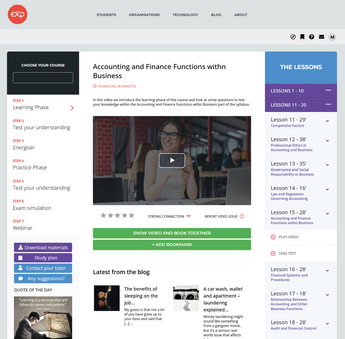
- Video tutorials from both the tuition and practice stages — experience how our expert tutors explain key syllabus areas and real exam questions.
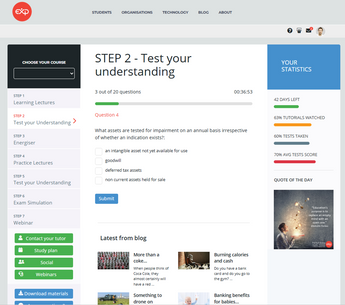
- Learning reinforcement exercises to check your understanding of core concepts.
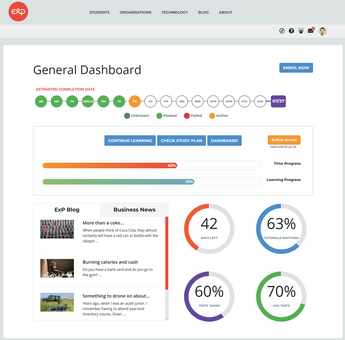
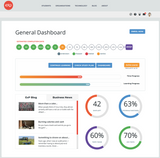
- Access to the ExP learning platform where you can explore how our structured study system works.
(Your free access lasts for 7 days from activation.)
When you upgrade to the full ACCA FA course, you’ll unlock:
- Complete tuition and practice stage tutorials covering the entire syllabus in depth
- ACCA Content Partner-Approved Learning Resources
- Focused energisers and webinars to keep you motivated and on track
- Full mock exam and Pass Guarantee
- Personalised study plan tailored to your goals
-
Benchmark statistics to compare your performance with other students

Everything you need to pass your FA exam with ExP is included




Trusted. Rated. Recommended.
Don’t just take our word for it — see what real students say about studying with ExP. Learners worldwide rate our courses highly for clarity, tutor support, and exam success, with feedback drawn from independent public reviews and ExP’s own student surveys — giving a genuine picture of the results our learners achieve.
Trusted by the best
Proud to serve leading global companies through our world-class training solutions.

































What You’ll Learn in ACCA Financial Accounting (FA)
The ACCA Financial Accounting (FA) exam builds your understanding of how financial information is prepared and presented for use by managers, investors, and other stakeholders. It introduces the key principles, concepts, and techniques that underpin financial accounting and reporting in today’s business world. You’ll learn how to record transactions, prepare trial balances, and produce financial statements for both incorporated and unincorporated businesses. Whether you’re completely new to accounting or looking to strengthen your technical foundation, FA gives you a clear and practical grounding in the financial reporting skills essential for accountants and finance professionals.
The Context and Purpose of Financial Reporting
Understand why financial reporting is essential in business. You’ll explore the role of accounting in communicating information to stakeholders, the objectives of financial statements, and how financial reporting supports decision-making and accountability.
The Qualitative Characteristics of Financial Information
Learn what makes financial information useful and reliable. This section explains key principles such as relevance, faithful representation, comparability, verifiability, timeliness, and understandability — and how these guide the preparation of financial statements.
The Use of Double-Entry and Accounting Systems
Build a solid foundation in double-entry bookkeeping. You’ll learn how to record business transactions using debits and credits, maintain ledgers and journals, correct errors, and prepare a trial balance — the core of every accounting system.
Recording Transactions and Events
Apply double-entry principles to real-world business activities. You’ll record transactions related to sales, purchases, cash, payroll, inventory, and non-current assets, and understand how these affect financial performance and position.
Preparing a Trial Balance
Test the accuracy of your accounting records. You’ll learn how to prepare and adjust a trial balance, identify and correct errors, and ensure that financial data is complete and ready for statement preparation.
Preparing Basic Financial Statements
Learn to prepare financial statements from scratch. You’ll prepare statements of profit or loss and statements of financial position for both incorporated and unincorporated businesses — applying the relevant accounting standards and presentation formats.
Preparing Simple Consolidated Financial Statements
Gain an introduction to group accounting. You’ll learn the basic principles of preparing consolidated financial statements for a parent and subsidiary, including the treatment of goodwill and intra-group balances.
Interpretation of Financial Statements
Develop your ability to interpret and analyse results. You’ll explore key performance measures such as profitability, liquidity, and efficiency ratios, and learn how to use them to assess the financial health of a business.