



ACCA TX - Taxation (UK) - Free 7 Day Preview
Couldn't load pickup availability
Experience ExP’s Platinum-approved learning for free
Try the ExP ACCA TX course completely free for 7 days and see why thousands of students choose us to pass first time.
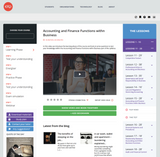
Your demo course includes elements of the full course such as:
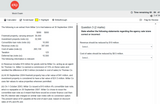
- Video tutorials from both the tuition and practice stages — experience how our expert tutors explain key syllabus areas and real exam questions.
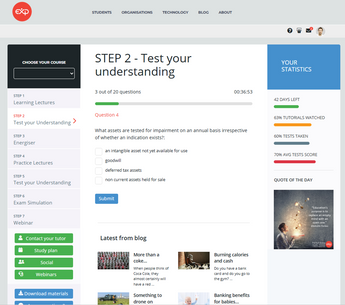
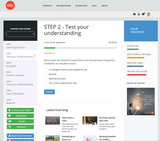
- Learning reinforcement exercises to check your understanding of core concepts.
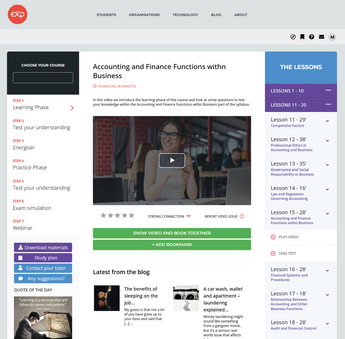
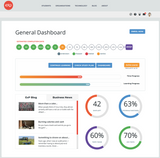
- Access to the ExP learning platform where you can explore how our structured study system works.
(Your free access lasts for 7 days from activation.)
When you upgrade to the full ACCA TX course, you’ll unlock:
- Complete tuition and practice stage tutorials covering the entire syllabus in depth
- ACCA Content Partner-Approved Learning Resources
- Focused energisers and webinars to keep you motivated and on track
- Full mock exam and Pass Guarantee
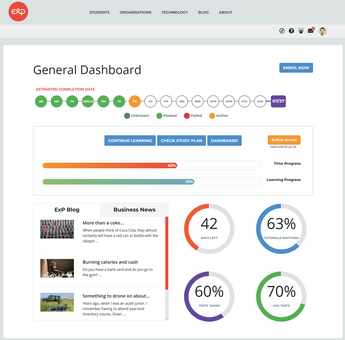
- Personalised study plan tailored to your goals
- Benchmark statistics to compare your performance with other students
%20-%20Free%207%20Day%20Preview)
Everything you need to pass your TX (UK) exam with ExP is included




Trusted. Rated. Recommended.
Don’t just take our word for it — see what real students say about studying with ExP. Learners worldwide rate our courses highly for clarity, tutor support, and exam success, with feedback drawn from independent public reviews and ExP’s own student surveys — giving a genuine picture of the results our learners achieve.
Trusted by the best
Proud to serve leading global companies through our world-class training solutions.
































What You’ll Learn in ACCA Taxation (TX) (UK)
The ACCA Taxation (TX) (UK) exam gives you a solid understanding of the UK tax system and the practical skills needed to calculate tax liabilities for individuals and businesses. You’ll learn how different taxes work, how they interact, and how to apply current UK tax rules in realistic scenarios — preparing you for advisory and compliance roles across finance and accounting.
Whether you’re progressing through the Applied Skills level or planning a tax-related career path, TX provides the core tax knowledge every finance professional needs.
The UK tax system and administration
Gain an overview of how UK taxation operates. You’ll learn about the purpose of tax, the structure of the UK tax system, key administration rules, filing and payment deadlines, penalties, interest, and HMRC’s compliance processes.
Income tax and NIC for individuals
Understand how to compute income tax liabilities and National Insurance Contributions (NIC) for UK taxpayers. You’ll cover employment income, trading income, property income, pensions, savings, dividends, and the treatment of allowable deductions and reliefs.
Personal tax planning and reliefs
Explore how tax allowances and reliefs — such as the personal allowance, marriage allowance, gift aid, and pension contributions — affect an individual’s final tax position. You’ll learn to apply these rules accurately to maximise tax efficiency while remaining compliant.
Capital gains tax
Learn how capital gains arise, how to compute gains and losses, and how annual exemptions and reliefs apply. You’ll cover disposals of shares, property, chattels, the bed-and-breakfasting rule, part disposals, and key reliefs such as gift relief and principal private residence relief.
Corporation tax for companies
Develop the ability to calculate corporation tax liabilities for UK companies. You’ll study trading profits, allowable expenses, capital allowances, adjusted profit calculations, investment income, group relationships, and the rules governing associated companies.
Value Added Tax (VAT)
Understand how the VAT system works, from registration and deregistration to output tax, input tax, rates, exemptions, partial exemption, and VAT returns. You’ll also learn how VAT applies to international transactions and digital services.
Capital allowances
Master the rules for tax-deductible expenditure on plant, machinery, and other qualifying assets. You’ll learn how to apply annual investment allowances, writing-down allowances, first-year allowances, and how to treat disposals and private use adjustments.