A woman in Italy has just helped redraw the boundaries of the modern workplace and all from her living room.
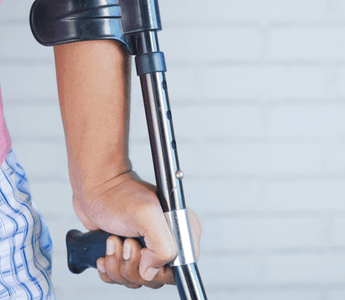
A 60-year-old employee in the law department at the University of Padua broke her ankle during a Zoom call with colleagues. Ten minutes before the end of the call, she stood up to retrieve documents from her bag, tripped, and fractured her ankle in two places.
What followed was not just surgery and hospital care but a legal battle that could influence how businesses think about remote work risk for years to come.
The Legal Question: Is Home a Workplace?
After the accident in 2022, the employee incurred €1,284 in private medical costs. However, compensation was denied by Italy’s workplace injury insurance agency on the basis that the incident had happened outside the office.
Her union, the Federazione Gilda Unams, appealed the decision in a court in Padua.
The judge ruled in her favour.
The key reasoning? She was gainfully employed at home at the time of the accident. Therefore, her home constituted a workplace for legal purposes. The state was ordered to cover her expenses.
In effect, the court confirmed that the employment relationship, not the physical building, defines the workplace.
Why This Matters for Business Students
From a business and management perspective, this case raises important issues in:
- Risk management
- Employment law
- Health and safety governance
- Insurance design
- Remote work policy
For years, companies have focused heavily on office safety: ergonomic chairs, fire exits, signage, and compliance audits. But what happens when the “office” is a kitchen table?
The pandemic accelerated remote working across Europe. According to Italy’s statistics agency, around 3.4 million people on permanent contracts were still working from home at least half the time in 2023. Although the number has fallen slightly, remote work remains structurally embedded in many sectors.
Across the European Union, the average share of people usually working from home is 8.9%, with Ireland, Finland and Belgium leading.
The workplace is no longer a single, controlled environment.
It is decentralised.
And decentralisation increases complexity.
Management Implications: Who Bears the Risk?
This case highlights a classic business tension:
Flexibility vs Control
When employers allow remote work, they gain:
- Lower office overheads
- Wider talent pools
- Higher employee satisfaction
- Potential productivity gains
But they also assume new forms of liability.
If an employee trips over a laptop cable at home during working hours, is that:
- A personal accident?
- Or a corporate liability?
The Italian court has now provided one answer.
From a governance perspective, this case touches on COSO risk principles and internal control design. Organisations must now think about:
- Home workstation assessments
- Clear working-hours definitions
- Remote work policies
- Insurance coverage extensions
- Documentation of authorised home working
Without clarity, businesses risk both financial and reputational damage.
The Grey Areas
This ruling may sound straightforward, but it raises difficult operational questions:
- What if the accident happens while making coffee?
- What if the employee is partially off-camera?
- What if the fall happens five minutes after official working hours?
In traditional offices, “in the course of employment” is easier to define. At home, the boundary between personal and professional space blurs.
Business students should recognise this as a live example of policy lag, namely where law and regulation struggle to keep up with technological and societal change.
Remote working technology (Zoom, Teams, cloud systems) moved faster than legal frameworks. Courts are now catching up.
Strategic Considerations for Employers
Forward-thinking organisations may respond in several ways:
1. Formal Remote Work Contracts
Explicitly defining:
- Approved working locations
- Working hours
- Equipment responsibility
- Insurance coverage
2. Home Risk Assessments
Some companies already require employees to complete health and safety checklists for their home workspace.
3. Insurance Review
Employers may need to renegotiate workplace injury coverage to include home settings.
4. Hybrid Model Tightening
Some firms may use cases like this to justify a push back toward office attendance, arguing that risk is easier to manage in centralised environments.
This links directly to broader debates about hybrid working policies across Europe.
The Bigger Economic Context
Six years after Covid first pushed millions into working from kitchens and living rooms, remote work remains popular but unevenly distributed across Europe.
While Italy’s homeworking rate sits below the EU average, countries like Ireland and Finland have embraced it more extensively.
This means multinational organisations face fragmented regulatory risk. What counts as a workplace in one country may not in another.
For global businesses, compliance complexity increases exponentially.
A Turning Point?
Andrea Berto of the Federazione Gilda Unams reportedly described the ruling as “another battle won for the recognition of workers’ rights.”
But from a business perspective, it is also a signal.
Remote work is no longer a temporary flexibility.
It is a legally recognised working environment.
The physical office is no longer the sole centre of employment risk.
Final Thought for Business Students
This case is a perfect illustration of how:
- Strategy (remote work adoption)
- Operations (workplace setup)
- Risk management (insurance & liability)
- Law (judicial interpretation)
intersect in the real world.
When companies redesign how work happens, they also redesign where responsibility lies.
And sometimes, that responsibility is sitting in someone’s living room.