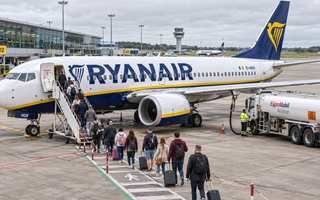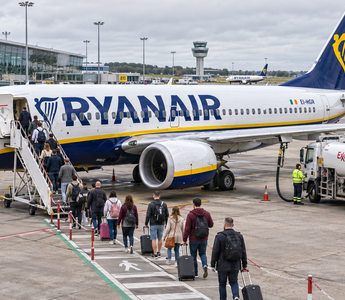
The departure lounge is busy. Most seats on the aircraft are occupied. More passengers are flying than a year ago. It looks like a successful period for an airline.
Then you open the accounts and discover that profit has fallen.
Ryanair, a major European low-cost airline group, reported exactly that combination earlier this month. In the six months to 30 September, passenger numbers rose 6% to 125.8 million and revenue increased 3% to €10.08 billion. Profit after tax nevertheless fell 15% to €2.15 billion.
You do not need to have flown with Ryanair to understand the lesson. Growth in customer numbers only helps the business if the income and costs associated with those customers work together.
More customers can pay less
Ryanair’s average fare fell 4%, while operating costs rose 10%. The company also reported a doubling in the price of the portion of its jet fuel that was unhedged. Those pressures help explain why additional passengers did not translate into higher profit.
Price and volume need to be considered together. Imagine a business serving 100 customers at £50 each. Revenue is £5,000. If it attracts 10% more customers but cuts its price by 10%, revenue becomes 110 multiplied by £45, or £4,950.
It is busier, but its revenue is slightly lower. These are hypothetical figures, not Ryanair’s prices. They illustrate why a percentage increase in volume does not simply cancel an equal percentage reduction in price.
That does not make every discount a mistake. On a flight already scheduled to depart, selling an otherwise empty seat can make a positive contribution if the extra revenue exceeds the additional costs. Across a route or a whole business, however, enough contribution must also be generated to cover fixed costs.
A full aircraft is only one measure
Airlines describe the proportion of available seats occupied as the load factor. Ryanair reported a half-year load factor of 95%, unchanged from the previous year.
That is useful operational information, but it does not reveal what passengers paid or what it cost to carry them. A business could improve occupancy through discounts while reducing the total contribution earned.
Managers therefore need measures that connect activity to financial performance. For an airline, these could include revenue per passenger, unit costs and route contribution. For a hotel, the equivalent questions concern room rates and occupancy. For a training business, they might involve enrolments, fees and delivery costs.
The principle travels well across industries: choose measures that help explain how serving customers creates profit.
Reducing uncertainty about fuel costs
Ryanair said 80% of its fuel requirements for the financial year ending March 2027 were hedged. That left part of its fuel exposure affected by higher market prices.
In simple terms, hedging can use contracts to make some future costs more predictable. An airline can plan fares and routes with greater confidence when it has reduced uncertainty over a major expense.
The objective is not necessarily to obtain the lowest possible price after the event. If market prices fall, a fixed-price arrangement may leave the business paying more than the new market rate. The trade-off is greater certainty when decisions must be made.
A finance team should also consider how much to hedge, for how long and what happens if the quantity actually needed differs from the forecast. Reducing one uncertainty does not remove every business risk.
Ryanair remained profitable during the half-year. The significance is the direction of change: more passengers and more revenue coincided with less profit.
For students analysing any growing business, the useful follow-up to “How many more customers?” is “What did we earn from serving them?”