Imagine a business announcing billions in operating profit, then reporting negative free cash flow. Has something gone wrong with the accounts?
Alphabet, Google’s parent company, reported that combination in its third-quarter results last month.
The figures describe different things. Understanding the difference helps explain both the cost of the AI investment race and a principle every accountancy student needs to grasp.
Following the cash
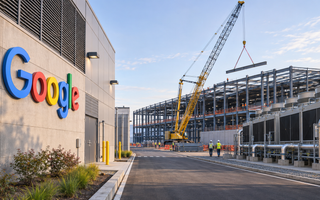
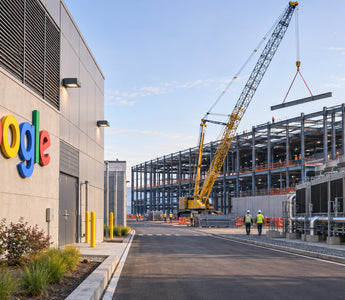
In the three months to 30 September, Alphabet spent more on capital expenditure than it generated from operating activities. It said most capital spending went into technical infrastructure supporting AI.
| Quarterly measure | US dollars |
| Operating profit | $40.6 billion |
| Operating cash flow | $42.3 billion |
| Capital expenditure | $51.4 billion |
| Free cash flow | −$9.1 billion |
Free cash flow here means operating cash flow less capital expenditure: $42.3 billion minus $51.4 billion gives negative $9.1 billion. Operating profit is a different starting point, reflecting expenses and income whose recognition may not coincide with cash payments and receipts.
An inventory build-up and a $5.2 billion payment relating to a European Commission fine also reduced operating cash flow, according to Alphabet.
Paying now and recognising expense over time
A long-lived asset creates an important timing difference. Paying for equipment can use cash immediately, while the cost recognised in profit is spread across the periods in which the equipment is used.
Consider an illustrative business buying a server for £12,000 in cash. Assume it is immediately available for use, has a four-year useful life, no residual value and is depreciated on a straight-line basis. Ignore tax and financing.
The purchase creates a £12,000 investing cash outflow. The annual depreciation charge is £3,000. At the end of the first full year, the asset’s carrying amount is £9,000, assuming no impairment or other adjustment.
Depreciation allocates the cost; it does not require a second payment to the supplier each year. For students studying IFRS, IAS 16 applies this principle by allocating an asset’s depreciable amount over its useful life. This is a teaching example, not a description of Alphabet’s reporting framework or actual depreciation calculation.
When spending ahead can make sense
Negative free cash flow in one quarter does not by itself prove that a business is in difficulty. A company may be building capacity that it expects to generate returns for years. Alphabet reported positive free cash flow of $19.7 billion over the preceding twelve months.
The harder question is whether the investment will earn enough. Managers need forecasts of future customer demand, prices and operating costs, including the expense of running and maintaining the infrastructure.
They also need to test less comfortable outcomes. What if customers buy less capacity than expected? What if competitors force prices down, or newer equipment makes the original investment less attractive sooner than planned?
These are investment appraisal questions. The amount spent measures resources committed. It does not establish the value created. A sound assessment compares the expected additional cash flows with the investment required, allowing for timing and risk.
For a finance team, the income statement and cash flow statement tell complementary parts of the story. One helps explain performance for the period; the other shows how cash was generated and used.
The next time a company announces impressive profits, look at its cash flow statement too. You may find that the biggest business decision sits in the investing section.