You order a coffee, find a comfortable chair and open your laptop.
An hour later, you’re still there. Perhaps you’ve bought a sandwich. Perhaps you’re considering another drink.
You came for the coffee. But the chair might be the reason you stayed.
That’s the business thinking behind Starbucks’ latest investment in its cafés.
A billion-dollar makeover
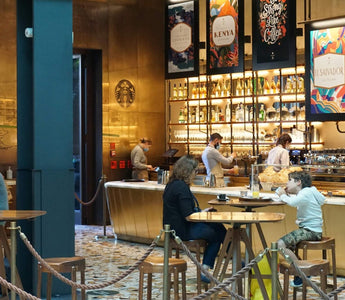
Starbucks is investing $1 billion in making its North American coffee shops more inviting, with comfortable seating, warmer interiors and features such as bookshelves and rugs. The aim is to restore the appeal of a space between home and work where people want to spend time.
For business students, it raises an interesting question: what exactly is the customer buying?
There’s more in the cup than coffee
Think about the different places you can get a coffee.
You could make one at home, grab a takeaway or settle into a café. The drink might be similar, but the experience (and the price you’re willing to pay) can be very different.
In a café, you might also value the comfortable surroundings, reliable Wi-Fi, friendly service or somewhere convenient to meet someone.
These extras form part of the value proposition: the combination of benefits that gives customers a reason to choose a business.
The coffee matters. So does everything around it.
Competing without being the cheapest
A coffee shop can try to win customers through low prices. It can also give them reasons to pay more.
That’s differentiation.
A welcoming atmosphere could help a café stand out from a cheaper takeaway counter. Customers might visit more often, stay for lunch or choose it as their regular meeting place.
But attractive furniture alone won’t solve everything. If the coffee disappoints or the queue takes forever, a lovely lampshade probably won’t rescue the experience.
The different parts of the service need to work together.
The awkward question about the armchair
Imagine two customers.
One buys a takeaway coffee and leaves within three minutes. The other buys the same drink and occupies a comfortable chair for three hours.
Which customer is better for the business?
It depends.
If the café is quiet, the seated customer may help create a welcoming atmosphere and eventually order more. If it’s packed, that occupied chair could prevent another customer from sitting down and buying lunch.
This is a practical example of capacity management. Space has a cost, and managers need to think about how effectively it is being used.
Will the investment pay off?
For the finance team, the question is whether better surroundings generate enough additional cash flow to justify the spending.
Useful evidence could include changes in customer visits, average spending, repeat business and operating costs. Comparing refurbished cafés with similar unchanged locations could help separate the effect of the makeover from seasonal changes.
More people sitting down isn’t automatically the same as more profit.
Your turn behind the counter
Starbucks’ strategy offers a useful reminder that customers often buy a whole experience, even when the receipt lists just one drink.
For a business, the challenge is creating an experience people value while making the numbers work.
If you managed a busy café, would your next investment be a faster coffee machine or a more comfortable place to enjoy the coffee?