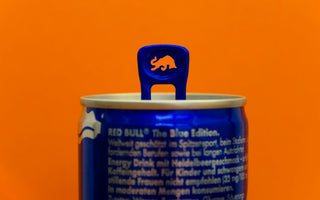
You walk into a supermarket for your usual energy drink. You find the right aisle, scan the shelves and discover that your favourite brand has disappeared.
Do you buy something else, or go to another shop?
That small decision sits at the heart of a much bigger business battle.
In late September, the Wall Street Journal reported that US supermarket group Kroger had stopped ordering Red Bull around the beginning of August following a pricing dispute. According to its reporting, Red Bull had sought higher prices while offering a rival retailer a cheaper deal.
For business students, the story raises an intriguing question: how powerful is a famous brand when a supermarket decides it can manage without it?
Who needs whom?
A popular brand gives customers a reason to visit a shop. A supermarket gives that brand access to customers.
Both sides bring something valuable to the relationship, which makes disagreements over price a test of bargaining power.
Red Bull’s position is stronger if shoppers insist on its product and will travel elsewhere to buy it. Kroger’s position is stronger if shoppers are happy to choose another drink while continuing to do their shopping in the same store.
The important distinction is between loyalty to a brand and loyalty to a retailer.
A customer might have a favourite energy drink but still value the convenience of completing the weekly shop in one place. Another might consider that particular drink essential and take the whole shopping list elsewhere.
Neither business can safely assume which reaction will dominate.
A small increase with a large effect
A supplier’s price increase may look modest when measured against the selling price. Its effect on the retailer’s profit can be much larger.
Consider a hypothetical supermarket selling a drink for £3 and buying it for £2. Ignoring tax and other costs, that leaves £1 of gross profit per can.
If the buying price rises by 10% to £2.20 and the selling price stays unchanged, gross profit falls to 80 pence. A 10% increase in purchase cost has reduced gross profit per unit by 20%.
These are illustrative figures, not Red Bull’s or Kroger’s actual prices.
The retailer can absorb the increase, raise its selling price, negotiate different terms or change what it stocks. Each choice has consequences.
Passing the increase to shoppers protects gross profit per can only if customers continue buying. Absorbing it protects the shelf price but leaves less money to cover wages, rent and other operating costs.
This is why a seemingly small disagreement can become commercially significant.
The value of a shelf
Shelf space is limited. Stocking one product means giving up the chance to use that space for another.
That makes opportunity cost part of the decision. A supermarket should consider what an alternative product could earn, alongside what the existing product contributes.
Sales volume alone is not enough. Managers also need to consider margins, stock turnover, handling costs and the effect on other purchases.
A drink with a modest margin could still be worth stocking if it brings in customers who buy profitable items elsewhere in the store.
Equally, a famous product may be less valuable than expected if shoppers readily replace it with something else.
The useful question is how the decision affects the whole business.
Walking away has a cost
Stopping orders makes a negotiation serious. It also exposes both parties to losses.
The supplier loses access to sales through that retailer. It may also give competing brands an opportunity to win customers who try something new and decide they like it.
The supermarket risks disappointing shoppers. Some may buy their drink elsewhere; others may move more of their spending.
There is a longer-term relationship to consider, too. Buyers and suppliers often work together on promotions, product launches and demand planning. A damaging dispute can make that cooperation harder.
Walking away is therefore a decision to assess carefully. The relevant comparison is between the likely outcome of accepting the terms and the likely outcome of operating without an agreement.
What the finance team should watch
The most useful evidence comes from customer behaviour.
Are sales of alternative drinks increasing? Is total profit from the category improving? Are affected shoppers visiting less often or spending less across the store?
For the supplier, the questions run in the other direction. Are customers following the brand to other retailers? How much lost business is recovered, and at what cost?
A favourable buying price means little if the retailer loses valuable customers. Protecting a wholesale price may also prove expensive if the supplier sacrifices too many sales.
Red Bull and Kroger offer a practical lesson in how pricing, negotiation and customer loyalty fit together.
A brand can be famous enough for everyone to recognise it. The real test of its bargaining power comes when shoppers must decide which they are more willing to replace: the drink or the shop.