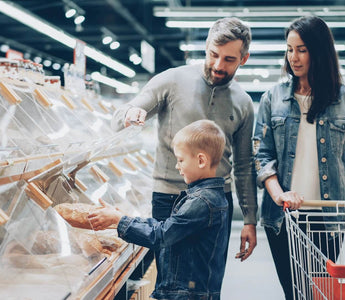
Have you ever gone into a supermarket for a loaf of bread and come out with crisps, a bottle of wine, some chocolate and three things you definitely didn't need?
That may not be entirely accidental.
Supermarkets spend a huge amount of time thinking about where products are placed, how customers move around the store and even what they hear and smell while they're shopping.
The aim is simple: encourage us to stay longer, notice more products and ultimately spend more money.
Fresh fruit and veg: a healthy first impression
Walk into many large supermarkets and one of the first things you'll see is fresh fruit and vegetables.
There are practical reasons for different store layouts, but there's also a marketing benefit to putting attractive fresh produce near the entrance.
Bright colours, carefully arranged displays and a feeling of freshness can create a positive first impression. Once you've put the broccoli, bananas and apples in your trolley, perhaps that giant bag of crisps doesn't feel quite so bad either!
It's a reminder that marketing isn't just about advertising. The physical environment in which a product is sold is part of the marketing experience too.
Why are the essentials so far away?
Bread, milk and other everyday items are often positioned away from the entrance or in locations that require shoppers to travel through more of the store.
Think about what that means.
If the milk was two metres inside the entrance, you could grab it and leave. If you have to walk through several aisles to find it, you pass hundreds of other products along the way.
Every extra product you see is another opportunity for an unplanned purchase.
That £1.50 loaf of bread can suddenly become a £25 shopping trip.
Eye level is buy level
Where a product sits on the shelf matters too.
The shelves directly in a shopper's natural line of sight are particularly valuable because these are the products we're most likely to notice first.
Brands may therefore compete for prominent shelf positions, while supermarkets can give strong positions to their own-label or strategically important products.
And what about products aimed at children?
Look lower down.
Cereals, sweets and other child-focused products can be positioned where younger shoppers are more likely to see them. Anyone who has taken a child shopping probably knows what happens next:
"Can we have this?"
Suddenly the child has joined the supermarket's marketing team.
The end of the aisle is valuable territory
Those big displays at the end of supermarket aisles aren't there simply because the supermarket had nowhere else to put the products.
End-of-aisle displays get lots of attention because customers naturally pass them as they move around the store.
And here's an interesting question: when you see a huge pile of a product at the end of an aisle, do you automatically assume it's on special offer?
Sometimes it is.
But the prominent positioning itself can be enough to make a product feel like a bargain or special purchase.
Even the music can influence you
Supermarkets aren't only thinking about what you see.
They're thinking about what you hear too.
One famous piece of consumer research looked at background music in a wine shop. When French music was played, customers bought more French wine. When German music was played, German wine sales increased.
Most shoppers reportedly weren't consciously aware that the music had influenced their choice.
Other research has investigated the tempo of background music, with slower music associated in some retail settings with customers moving more slowly and spending more.
That's fascinating from a business point of view.
A supermarket doesn't necessarily need an advert saying:
BUY FRENCH WINE!
A subtle change to the shopping environment may influence behaviour without customers consciously thinking about it.
Then there's the smell...
You walk past the bakery and suddenly smell freshly baked bread.
Now you're hungry.
Retailers know that smell can be powerful. Bakeries, coffee shops and food counters can make a supermarket feel fresh and appealing, while also stimulating appetite.
The longer you spend in the store feeling hungry, the more dangerous your shopping trolley becomes!
And finally... the checkout
You've successfully navigated the supermarket.
You've resisted the giant display of biscuits. You've ignored the two-for-one promotion.
You've walked straight past the ice cream.
You're nearly free.
Then you reach the checkout.
Small, inexpensive products placed near tills can encourage one final impulse purchase.
Historically this has included sweets and chocolate, although many supermarkets have changed their checkout policies and product ranges in response to health concerns and regulation.
The principle remains important: while you're waiting, you have time to look at products you probably weren't planning to buy.
"Oh, go on then..."
That's exactly the sort of decision retailers are hoping for.
What does this teach us about business?
The supermarket is effectively a giant lesson in consumer behaviour.
Businesses don't simply ask what do customers want to buy?
They also ask:
Where should we put it? How should we display it? What should customers see first? How can we encourage them to explore? And what environmental cues might affect their decisions?
Small changes can matter enormously when they're multiplied across thousands (or millions) of customers.
Imagine a supermarket changes its layout and the average customer spends just 50p more per visit.
If 100,000 customers visit each week, that's an extra £50,000 of weekly revenue.
Suddenly, deciding where to put the bread doesn't seem like such a small decision.
Next time you're shopping...
Have a look around.
Where's the milk? What's at eye level? What's on the end of the aisle? What music is playing? What can you smell? What products are waiting for you near the checkout?
Then ask yourself one final question: